Ground beef is a foundational food for Canadian consumers. It’s the most popular red meat purchased for cooking at home in Canada and is an important component of beef sales. We also know that its reputation has been challenged by threats from Health Canada’s proposed front-of-package labelling requirements as well as the association with ‘fast-food meals’ as ‘junk food’ and unfair claim comparisons by branded poultry grinds and simulated grind products in their new product launches.
To address these issues, Canada Beef’s Consumer Generic Marketing program developed a ground beef information resource under the ThinkBeef.ca mark—The Ground Beef Toolkit—written specifically for influential information leaders in the food/health arena. These include food media, nutrition and culinary educators/experts and retailers in Canada. It will also help unify and align any messaging around ground beef from Provincial beef groups and other stakeholders.
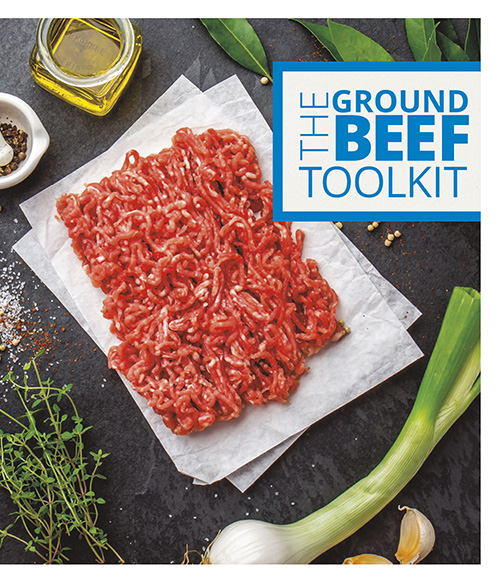
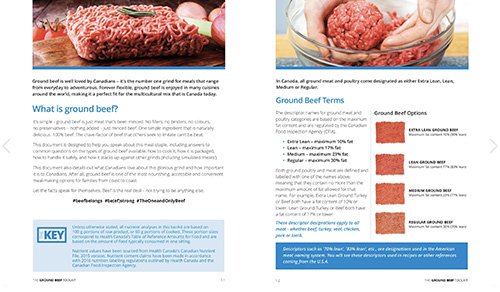
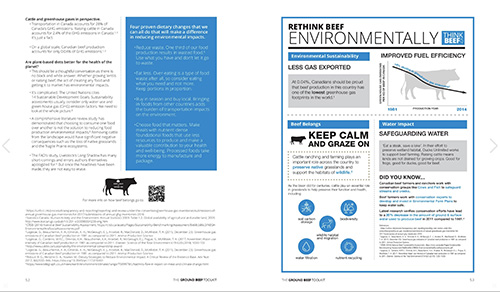
The goal of the Ground Beef Toolkit is to ensure that these experts have the most current, accurate and relevant information about this important Canadian dietary staple. The Toolkit features six concise chapters covering topics including nutrient comparisons versus other grinds; how Canadians rely on ground beef; buying and cooking basics; the beef sustainability story; product claims and more.
Before the launch of the Toolkit, we commissioned an online survey of thought-leaders with three objectives:- To gain insight into how to best position the Toolkit to maximize uptake.
- To determine if there were any refinements that would be necessary or helpful to meet their needs.
- To distribute the Toolkit to a test market, providing the opportunity to communicate some of the remarkable facts about ground beef that would be of value to these influencers.
Twenty-seven participants were sent hard copies of the resource. They were asked to read through it then comment back via a 12-question anonymous survey.
Of the participant thought-leaders in expert categories, 55% were Registered Dietitians, 19% Food/Media Writers/Content Creators, 14% Culinary Instructors, 9% Food/Nutrition Students. Four additional participants were industry representatives including a processor, retailer, stakeholder communications/marketer and foodservice manager.
What they told us:
- 79% found the Toolkit extremely or very useful in their work. The remaining 21% found it moderately useful.
- The Toolkit is best positioned as a “Culinary IQ” document for ground beef with comparisons to the changing ground meat category.
- In rating the usefulness of the Chapters, all were ranked heavily in the top two positive choices: extremely or very useful.
- Usefulness Ratings (in descending order)
- How ground beef stacks up - 75%
- Ground beef how-to - 75%
- Sustainability - 68%
- Ground beef matters - 68%
- Nutrients - 63%
- Appendix - 58%
- Educators valued the Toolkit as a resource for developing lectures and curriculum and client counselling.
- The Toolkit was recognized as providing some key new information, specifically on the topic of beef and fat/nutrition, culinary know-how, and sustainability.
- Writers/content developers appreciated that the toolkit is a ‘one-stop’ shop resource with comprehensive references.
- The preferred format options were the print version and downloadable PDF.
- Most respondents rated each section of the toolkit as either very or extremely useful. Here is a sampling of some of the messages that were reported as being most impactful:
- That simulated meats should be considered as ultra-processed food.
- That Canadians are not over-consuming red meat.
- That ground beef is not a major contributor of fat or saturated fat in the Canadian diet.
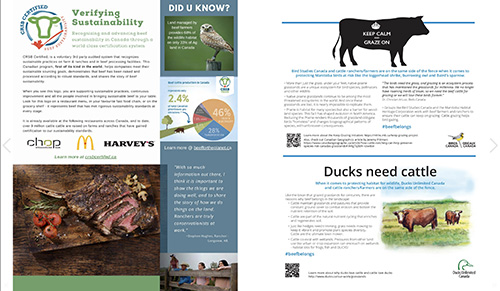
- That beef has environmental benefits and raising cattle fits into our natural ecosystems.
- Understanding the difference between %DV of fat, versus % fat designation.
- Information on packaging options, cooking options, storage options and food safety.
- That lean is lean – grinds have matching max fat levels as defined by their category designation whether poultry or meat.
Next steps:- Two dedicated e-blasts are booked for February and March 2021 with distribution to reach 6000+ dietitians/health professionals.
- Marketing efforts for Q4 will focus on culinary/nutrition educators, home economists, dietitians, nutrition students, food media, ag educators, beef ag policy, retailers.
- Development of materials to promote the toolkit.
Some of the comments provided in the survey included:- I was interested to learn we are not “overconsuming” red meat and wonder why we think we are.
- Reminded of how valuable of an ingredient beef is to our daily diets.
- The comparison between veggie patties and beef patties had a lot of impact on me and I think many consumers would be surprised to consider veggie patties as highly processed foods.
- I have continually learned/seen that red meats, including ground beef, should be limited to 2x/week, but a better approach would be to limit the intake of processed and ultra-processed foods.
- The piece on Beef and Sustainability was very impactful for me. It's been a difficult topic to navigate in the past.
Back to main page
|