|
|
| View in browser | |
 Canadian beef makes significant breakthrough at Costco Japan Costco Japan recently began purchasing Canadian beef for their best-selling beef offering, the Yakiniku (BBQ) beef pack which is found in the deli section of Costco. 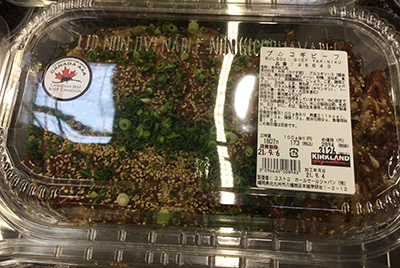 An estimated 1.8 million 2-kilogram Yakiniku beef packs are sold annually. This means an increase of 3,600 MT of Canadian beef to Japan. The package label is in English and Japanese and there is point of sale signage to inform customers that the store sells AAA beef from Canada. 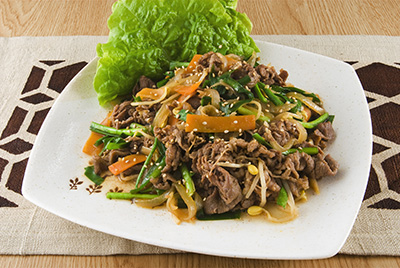 Canada Beef provided the artwork and production for the AAA labels which were applied to product packaging. Canada Beef is also working with the distributor to support the sales of Canadian beef available at Costco Japan during the initial launch period and beyond. Costco Japan is the largest and fastest-growing grocery retailer in this market. Sales continued to climb the first half of this year as Japanese consumers maintain their at-home cooking habits. Costco opened its first Japan location in 1999 and has since grown to 30 stores—the most Costco store locations outside North America. Japan COVID-19 Update As the highly contagious Delta variant drives a surge in cases across the country, the Japanese government extended its fourth COVID-19 coronavirus state of emergency to September 12. Japan's Ministry of Health is trying to speed up the nation's vaccination rollout. Japan’s total beef import volumes in June were 61,110 tonnes, down 1% year-over-year (YOY) but imports from Canada recorded 4,720 tonnes, up 20% YOY, resulting in six consecutive months’ growth. Canadian beef short plate is still the leading exporting beef cut, representing 57% of the total volume. The Japan Supermarket Association announced that grocery sales in July were about the same as last year but up 6.8% compared with the same period in 2019 (pre-COVID-19). Sales of meat and poultry products were down 2.6% YOY but up 7.8% compared with the same period in 2019. South Korea COVID-19 Update The toughest social distancing measures of Level 4 have been in force in the greater Seoul area for the last two months with the onset of the fourth wave of the pandemic. There are approximately 2,000 new COVID-19 cases per day. The South Korean economy is facing continued uncertainty as face-to-face service sectors have been badly affected. At the end of August, Korea’s total beef imports (quarantine statistics) were 292,850 tonnes, up 6.3% YOY, and imports from Canada were 6,458 tonnes, up 61% YOY. Canadian beef’s market share reached 2.2% in August. In August, evening sales at BBQ restaurants were estimated to have been cut in half YOY, even in popular areas. However, the demand for imported short ribs from the retail sector, including online channels, has greatly increased to make gift sets for the Korean Thanksgiving Chuseok holidays on September 20-22. The demand for back ribs, including those from Canada, has also increased, as Galbitang (rib soup) becomes popular as the weather gets cooler. Back to main page  Japan Team Yuko Onizawa, Ichiro Kiyotomi, Takako Toyama |
|
CONTACT US Suite 146, 6715 – 8th Street NE Calgary, AB Canada T2E 7H7 Tel: (403) 275-5890 [email protected] canadabeef.ca |
You’re receiving this newsletter because you’ve subscribed to Canada Beef Performs. No longer interested? Forward to a friend? Comments? Email our editor at [email protected] © 2021 Canada Beef. All rights reserved. |

|
 |