
|
|
| Cliquer ici pour lire l'infolettre en français | View in browser |
 Meet the Farmer: Karla Hicks Ranching is all Karla Hicks has ever known. She grew up with purebred Black Angus cattle, married a man who had purebred and commercial Charolais cattle, and today she and her husband, Jason, own and operate Bluestone Stock Farms near Parkbeg and Mortlach, Saskatchewan. Their 15,000 acres of land are where the Missouri Coteau rises into a ridge of hills, native prairie and cropland on the eastern edge of the Palliser Triangle. It's a beautiful and unforgiving landscape, and Hicks will tell you straight up: it rewards careful land management. In that regard, Hicks has amassed a formidable knowledge of water and rangeland management and innovative conservation practices that have seen the family effectively manage land, livestock and wildlife through thick and thin - informed and reasoned advice shared readily with ranchers, agricultural and livestock students, researchers and others for whom caring for the land is more than a philosophy; it’s a way of life. 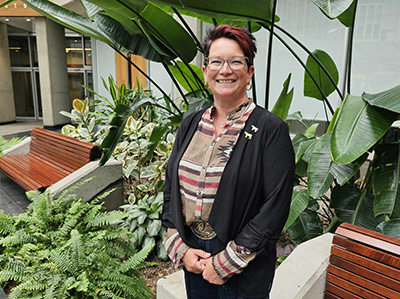 Most recently, Hicks had the opportunity to share perspectives with pastoralist and ranching women at the Global Gathering of Pastoralist Women in Kathmandu, Nepal. Hicks was one of two Canadians at the event, which recognizes the role of these women and girls in caring for global rangelands and producing food and fibre from livestock. Bluestone Stock Farms’ 800 cows are largely sustained by the land’s own feed and pasture, a reflection of the stewardship that has been at the heart of the Hicks family for generations. Hicks sits on the provincial VBP+ committee in Saskatchewan (the farm is VBP+ certified), maintains relationships with various conservation agencies, and has served on industry boards. The family ranch received Saskatchewan’s Environmental Stewardship Award in 2015. 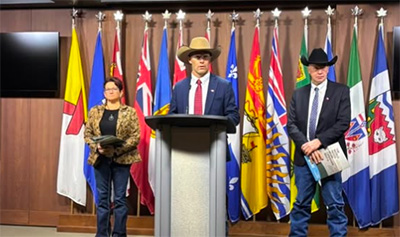 The immense sense of pride Hicks has for her work isn’t in the accolades and certifications; it’s found outside, on the land, and in being inspired by nature, especially when working through challenging events like drought. 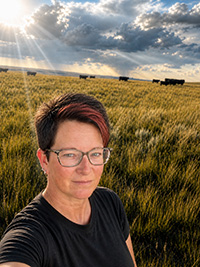 “When we get timely rains and the grass is growing, there are all kinds of wildlife sharing our pastures and our water systems,” she said. “This means our land is healthy. That makes me most proud of our work.” “When we get timely rains and the grass is growing, there are all kinds of wildlife sharing our pastures and our water systems,” she said. “This means our land is healthy. That makes me most proud of our work.”That pride runs through every season — calving, weaning, watching the growth explosion when cattle hit good grass in summer — and is perhaps most visible in the generation coming up behind her. Karla and Jason have laid the foundation for their children, the fifth generation of the Hicks family, to farm the land, with a sixth generation already on the horizon. "I used to say our kids motivated us. Now I'd say it's our grandbabies," Hicks said. "We want them to grow up understanding the value of native grasslands, why we worked so hard to protect them, and why we stayed — even through the hardest years." 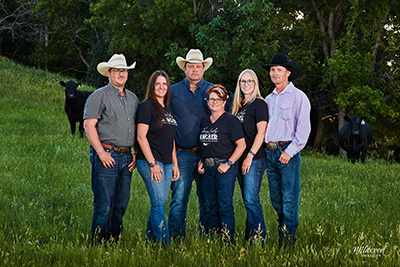 The spring of 2018 marked the beginning of a persistent drought that plagued the region for years. The farm’s well-established water systems couldn’t keep up with demand and began to fail as dugouts and sloughs dried up. The family adapted by making strategic improvements to their livestock watering systems and invested in new equipment. They undertook regular water testing and relentless education because Hicks understands that this is what farming in this place demands. The business of ranching is said to require a deep passion, which can be a bit of a misnomer for those unfamiliar with the rigours and demands of the job. Hicks noted that there is often a lack of understanding of just how adaptable and educated Canadian beef farmers need to be to succeed in their work. “We’re CEOs, CFOs, veterinarians, agronomists, mechanics, equipment operators, marketers, and land stewards — often all in the same day,” she said. “We make big decisions with lots of risk but lots of value. The romantic image of ranching or owning cattle just doesn’t exist.” Hicks has a variety of staple dishes that are her go-to family favourites on busy days, including Classic chili and Prime roast. Our Meet the Farmer: International Year of the Woman Farmer campaign launched in January 2026 and will run the full calendar year. A Canadian woman owner-operator is announced each month on our social channels, with detailed information provided in Canada Beef Performs and on our website. Submitted by Gina Teel, Director, Stakeholder Communications Back to main page  GINA TEEL Director, Stakeholder Communications |

|
You’re receiving this newsletter because you’ve subscribed to Canada Beef Performs. No longer interested? Forward to a friend? Editorial contributor and oversight provided by Gina Teel, Director, Stakeholder Communications, Canada Beef. CONTACT US [email protected] canadabeef.ca © 2026 Canada Beef. All rights reserved. 
|

|