
|
|
| Cliquer ici pour lire l'infolettre en français | View in browser |
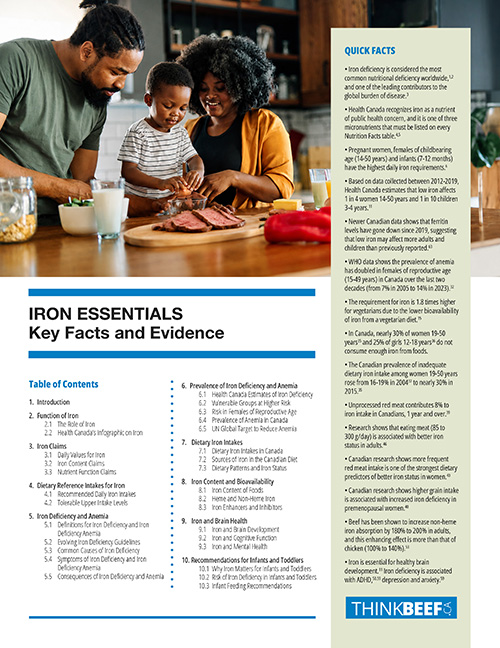
 Iron—Beef’s very important nutrient Beef is rich in nutrients and plays a vital role in a healthy diet, but what truly sets it apart from other protein sources is its iron content. Except for certain shellfish (such as oysters and mussels), few foods match beef’s iron levels—especially heme iron, which is the most readily absorbed form. This abundance of iron is particularly significant in Canada, where iron deficiency is a growing concern, and recent evidence suggests rates are on the rise. Given the public health importance of iron for Canadians, Canada Beef regularly develops campaigns and messages for health professionals, consumers, and policymakers about the value of beef and the contribution it can make in reducing iron deficiency. To support these efforts, Canada Beef has compiled recent research into a comprehensive new resource titled the Iron Essentials toolkit. Access the resource here. This toolkit takes a closer look at iron than any resource Canada Beef has produced to date. It compiles research conducted for iron campaigns over the last several years and incorporates the latest findings and evidence from earlier this year. This resource was shared with Health Canada in June and will be shared with over 4,000 Registered Dietitians in this year’s iron campaign, scheduled for October. Here is a sample of some of the findings captured in the new toolkit:
 Back to main page  KARINE REKUNYK Director, Health & Nutrition |

|
You’re receiving this newsletter because you’ve subscribed to Canada Beef Performs. No longer interested? Forward to a friend? Editorial contributor and oversight provided by Gina Teel, Director, Stakeholder Communications, Canada Beef. CONTACT US [email protected] canadabeef.ca © 2026 Canada Beef. All rights reserved. 
|

|